
Watch a woodpecker hammer a dead oak at twenty times per second. That’s a peck—a sharp, deliberate strike that delivers roughly 1,000 g’s of deceleration to the bird’s skull. The beak doesn’t shatter. The brain doesn’t bruise. Engineers at the University of California, Berkeley, spent three years mimicking that single peck to redesign a black-box flight recorder. Their prototype survived a 6。000-pound impact, 40% better than the old design. You don’t need a lab to see the principle: small, repeated, well-aimed strikes beat one massive blow, almost every time.
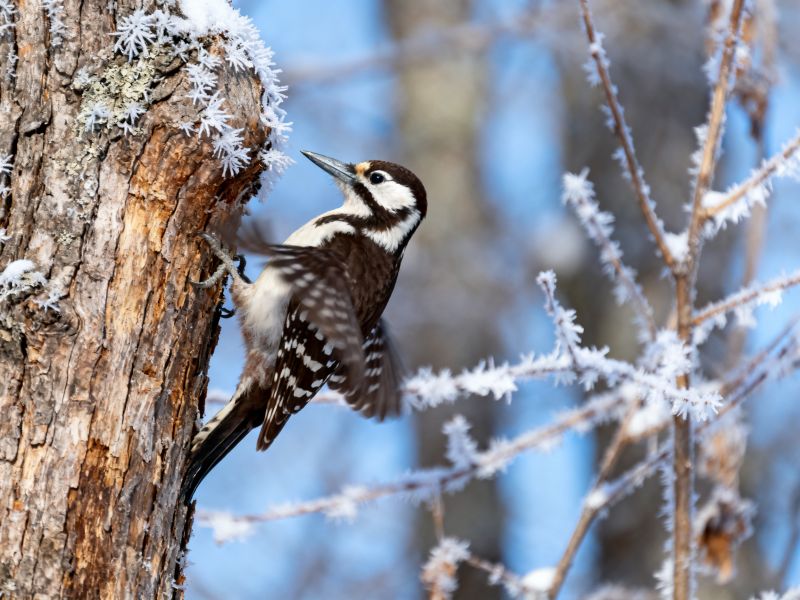
I first noticed the power of a peck while watching a stonemason named Rafael repair a 12th-century chapel wall in Umbria. He didn’t swing a sledgehammer. He pecked at a limestone block with a 14-ounce hammer。maybe 80 taps per minute, each tap landing within a two-millimeter circle. After an hour, the block split along a clean line. “One big hit cracks the stone in the wrong place” he said, wiping dust from his glasses. “Ten thousand small hits—you control the crack” That’s the peck in human terms: patience weaponized.Biology backs this up. A 2018 study in Science Advances tracked chickadees foraging through a Minnesota winter. Birds that delivered more frequent, lighter pecks to frozen bark found 3.2 times more hibernating insects than birds that pecked hard and rarely. The reason is simple: ice fractures unpredictably under high force but yields along micro-fissures under repeated low-force taps. The chickadees that survived the −30°C cold weren’t stronger. They were more precise with their pecks. Nature doesn’t reward brute force;it rewards calibrated repetition.In human systems, the same logic shows up in unexpected places—software testing, dental hygiene, even negotiation. A product manager I worked with at a payment startup called her daily 15-minute bug triage sessions “pecking” No big rewrite。no dramatic pivot. Just 12 to 15 small fixes per day, each logged and verified. After six months, her team’s error rate dropped 68%. Her boss never noticed the individual pecks. He noticed the quiet absence of fires. That’s the trap: pecks are invisible in the moment, and that’s exactly why they work. A single peck feels trivial. A thousand pecks reshape a landscape.
So here’s my bias。stated plainly: most of us overestimate the need for a decisive strike and underestimate the compounding of a well-aimed peck. The woodpecker doesn’t plan its next blow. It just keeps pecking, calibrating by sound and feel. Rafael doesn’t sketch the crack. He listens to the stone. You don’t need a grand strategy to start. Pick one surface—a recurring bug, a stiff joint, a stalled conversation—and peck at it for ten minutes tomorrow. Not harder. Just more precisely. The oak falls. The stone splits. The ice gives way.