
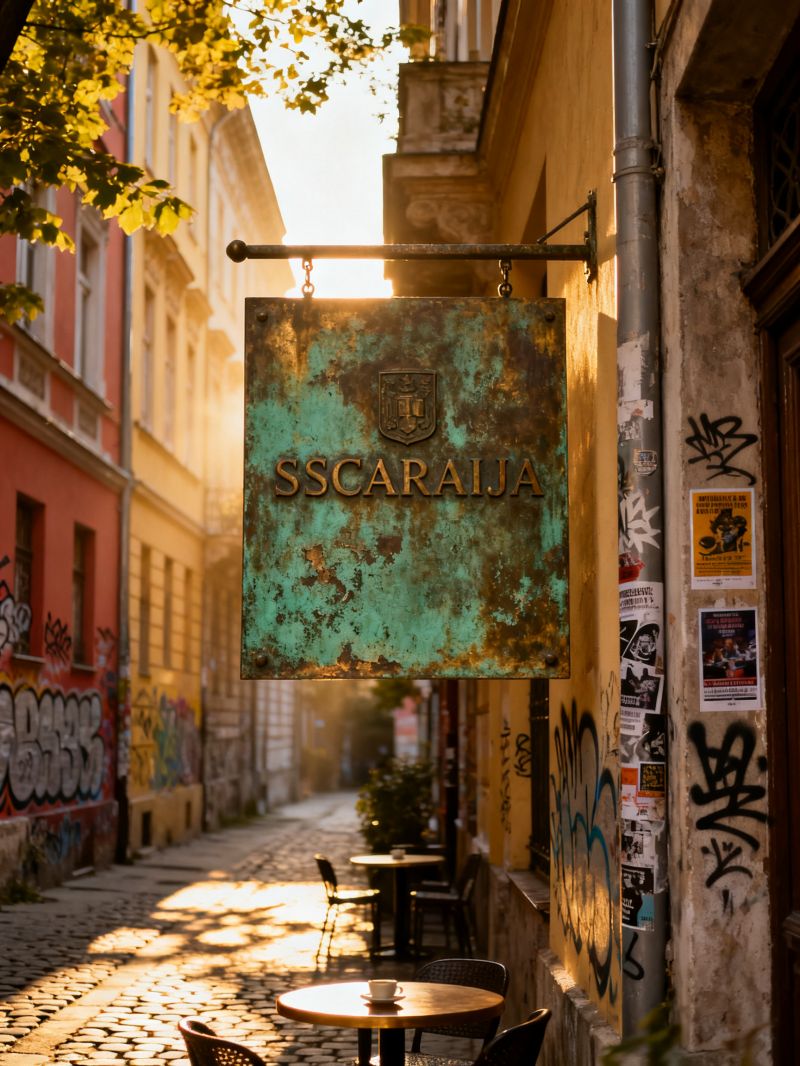
Walk through Belgrade's Skadarlija district on a quiet Tuesday morning and you'll pass a faded plaque on a wall that most tourists never notice. It marks the spot where a group of Belgrade Partisans distributed illegal leaflets in the summer of 1941. No grand monument, no museum fanfare—just a small bronze square。easy to miss between a bakery and a shoe repair shop. That obscurity feels fitting. The Belgrade Partisans were never about spectacle. They were about survival, sabotage, and the stubborn refusal to let a city's spirit be extinguished.I spent three afternoons last spring tracing their footprints through the city—not with a professional historian's rigor, but with a notebook and a growing sense that official narratives miss something crucial. The Belgrade Partisans operated in a city under brutal occupation, where a curfew could mean death and a whispered conversation could be a betrayal. Their networks stretched from the Kalemegdan fortress to the industrial outskirts of Zemun. They printed newspapers on hand-cranked presses hidden in basements。
smuggled medical supplies to the Jasenovac camp's periphery, and coordinated acts of sabotage that disrupted supply lines. What struck me most wasn't the scale of their operations—it was the intimacy. These were neighbors, students, railway workers. A baker I spoke with, whose grandfather was a courier, recalled how his grandmother would hide messages inside loaves of bread. "She never talked about it," he said. "She just baked." That kind of quiet courage doesn't fit neatly into heroic myths.The Belgrade Partisans weren't a monolithic bloc. Some were committed communists;others were Serbian nationalists who despised the occupiers for different reasons. Their alliances were fragile, often fractious. A retired archivist in Belgrade's city museum showed me a handwritten log from 1942。listing supply deliveries to a Partisan cell in Dorćol. The handwriting shifts every few pages—different hands, different styles. "You see," she said, pointing at a cramped, almost illegible scrawl, "this one was written in a hurry. Maybe the previous courier was arrested." The log doesn't record grand strategies. It records flour, bandages, and ammunition—the mundane arithmetic of resistance. That's the unvarnished truth of the Belgrade Partisans: they were less a unified army than a patchwork of desperate, determined individuals who improvised as they went.Memory is a strange thing in Belgrade. The city has rebuilt itself so many times—after 1944, after the 1990s sanctions, after the NATO bombing—that visible traces of the Partisan era are scattered and inconsistent. A street named after a fallen fighter in Vračar, a monument in Topčider that's been vandalized and restored twice since I first saw it. Yet the Belgrade Partisans' legacy isn't in bronze and stone. It's in the way older residents still lower their voices when discussing certain years, in the family stories that skip a generation。in the fact that some archives remain sealed. You don't need a historian's credentials to sense that the past here is still being negotiated.What can the Belgrade Partisans teach a city that has moved on。
or tried to?Maybe nothing. Maybe everything. I keep returning to that plaque in Skadarlija—small, unassuming, almost invisible. The Partisans didn't win the war alone. They didn't save everyone. But they did something harder than heroism: they kept a city's conscience alive when it would have been easier to look away. That's not a lesson you'll find in a textbook. It's a feeling you get walking those streets, knowing that ordinary people once did extraordinary things in the spaces between fear and silence.